01Origins
c. 1119
A brotherhood is formed
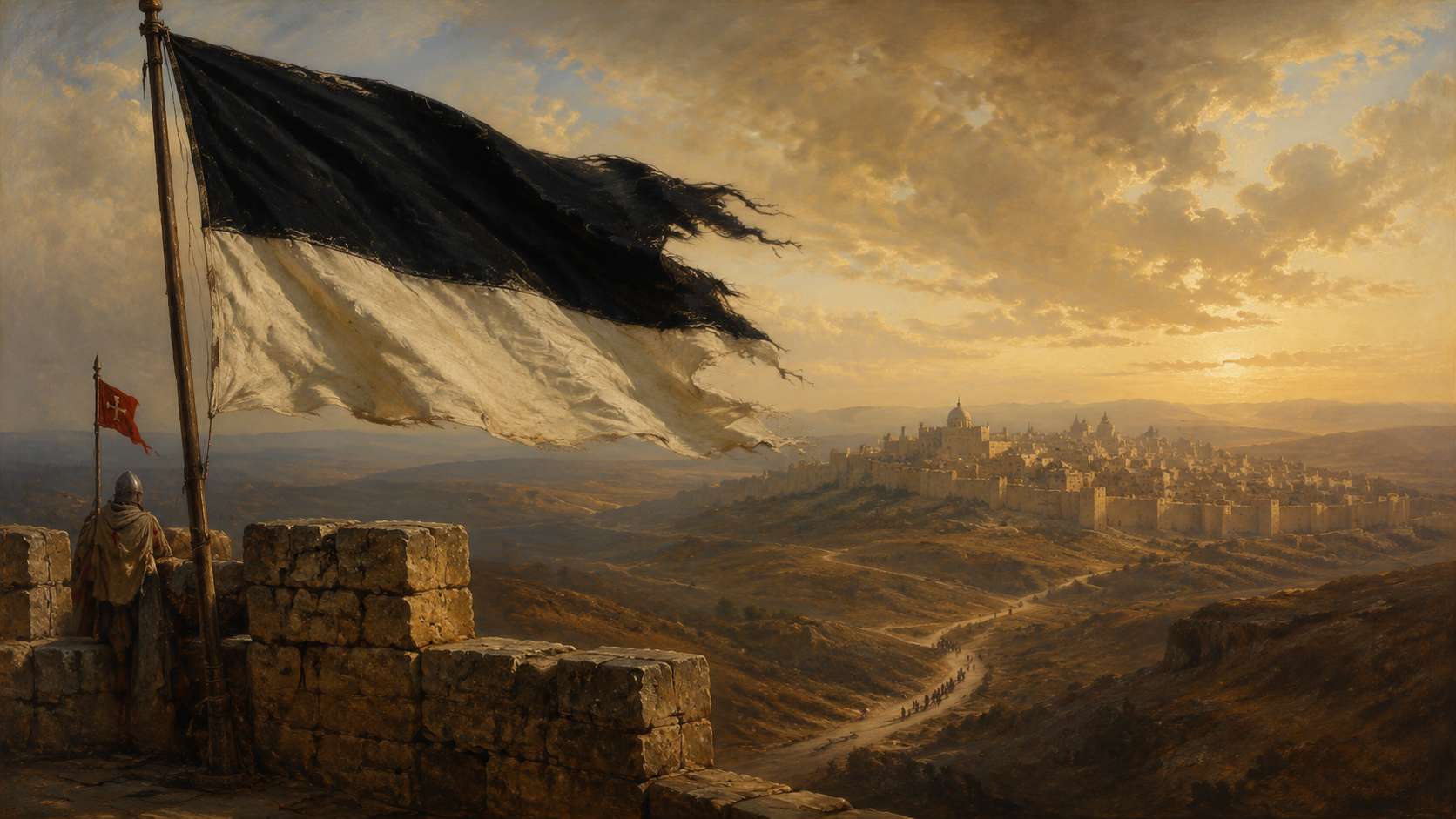
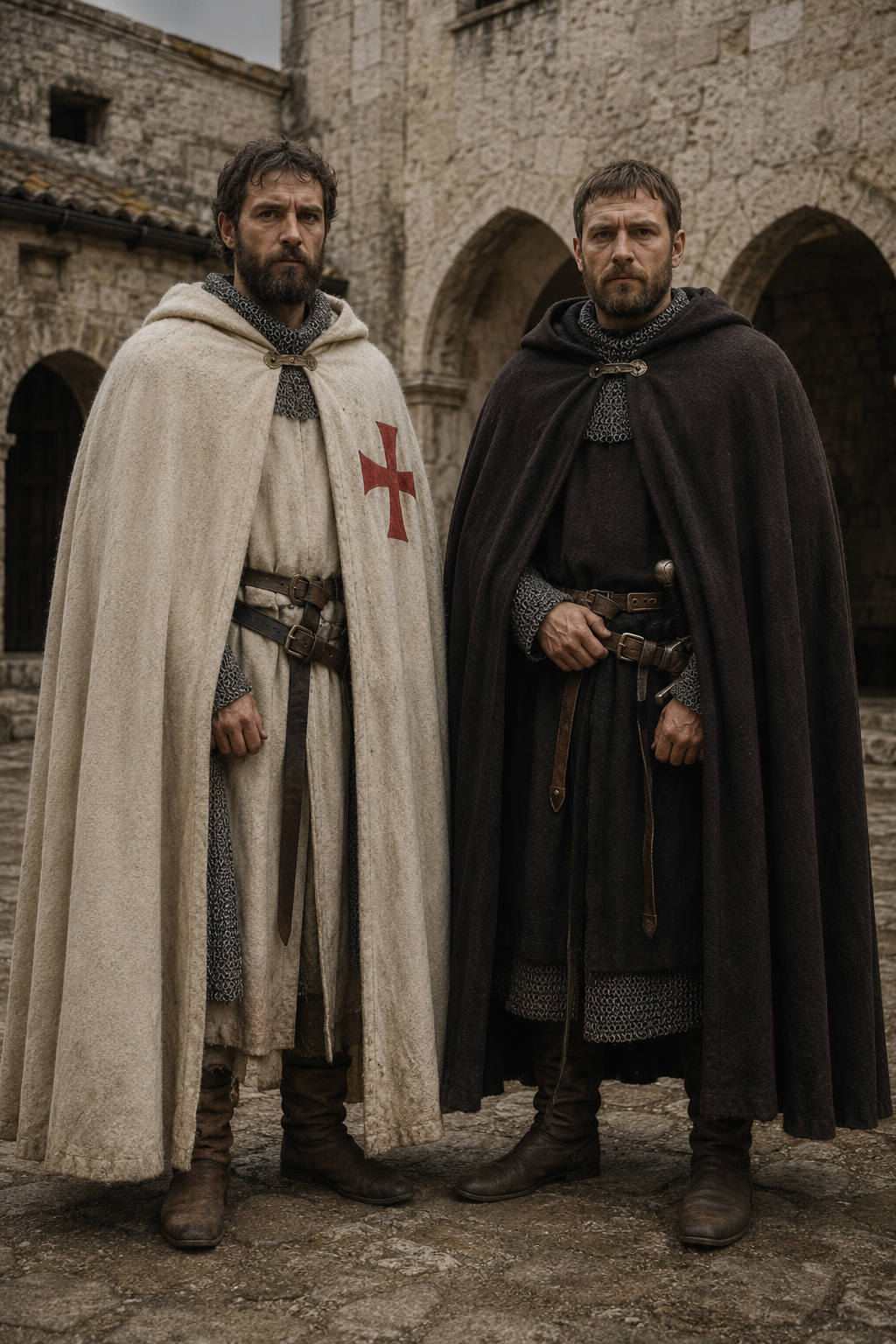
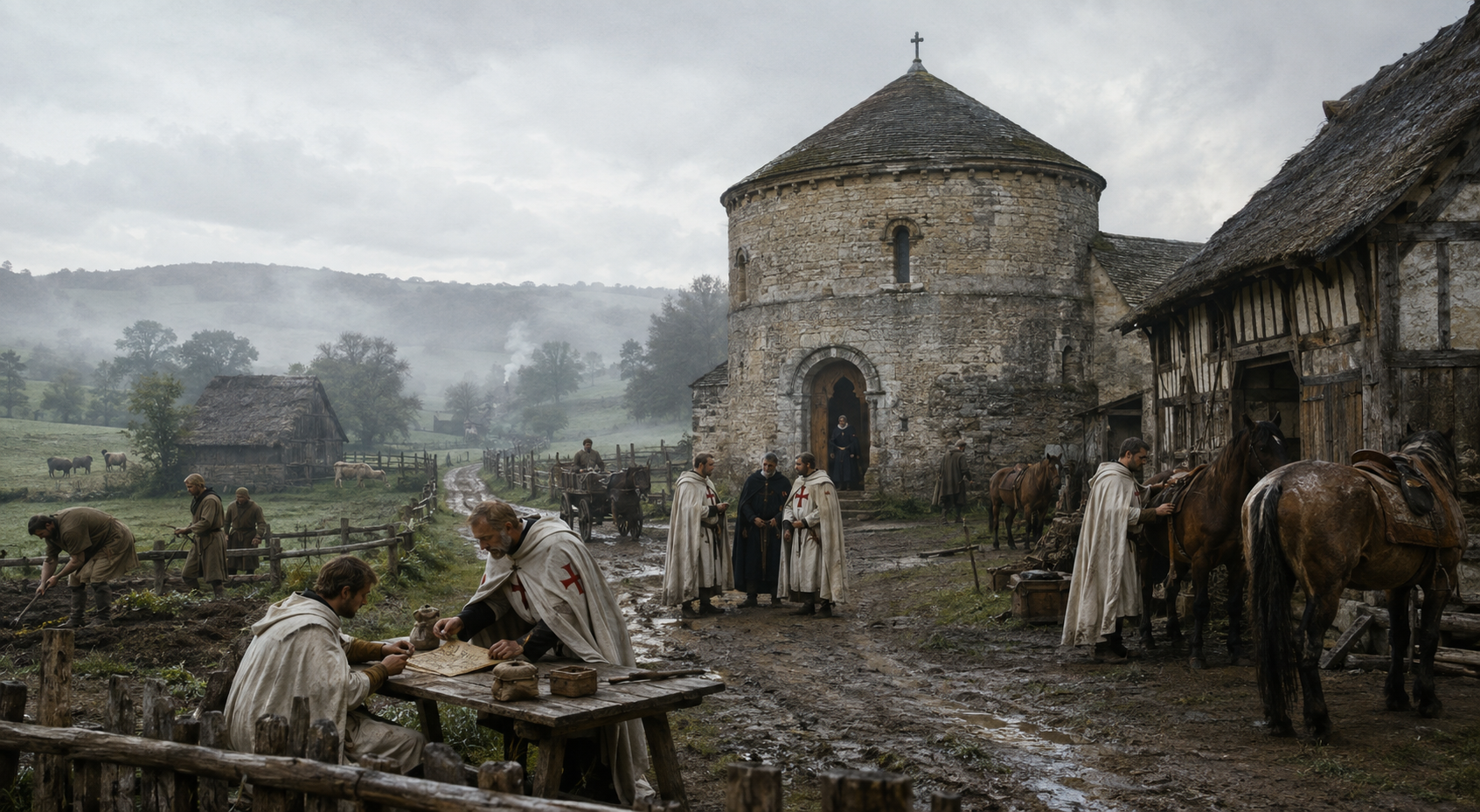
In the unsettled years after the First Crusade, pilgrims travelling from the coast to Jerusalem faced robbery and violence. The French knight Hugh of Payns gathered a small group of companions who vowed to live as religious brothers and protect these travellers. Later tradition counted nine founders, although the exact number and date remain uncertain. Their unusual calling united the cloistered discipline of monks with the armed service of knights.
02Origins
1120
A home on the Temple Mount
King Baldwin II of Jerusalem provided the new brotherhood with quarters in part of the al-Aqsa Mosque. Crusaders believed the building stood within the precinct of the ancient Temple of Solomon. From this association came their formal Latin name: the Poor Fellow-Soldiers of Christ and of the Temple of Solomon. The shortened name—Templars—would soon be recognised across medieval Christendom.
03Recognition
1129
The order is recognised
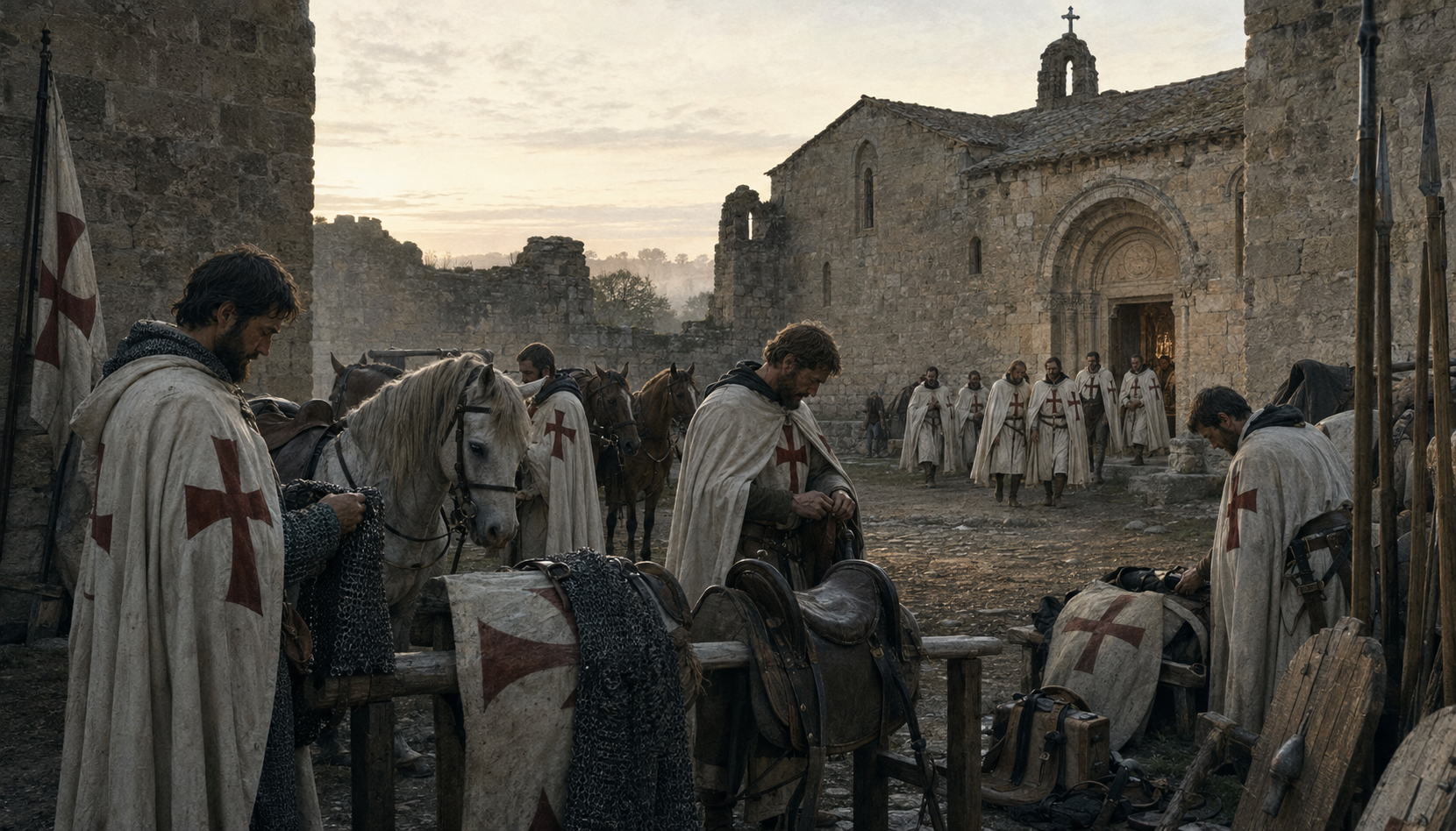
The Council of Troyes formally approved the brotherhood and gave it a written rule shaped by Cistercian ideals. Bernard of Clairvaux, one of Europe’s most influential churchmen, defended the idea of the warrior monk and praised the Templars’ mission. Church recognition transformed a little-known Jerusalem fraternity into an international religious order, inspiring noble recruits and generous gifts of land, money, horses and equipment.
04Privilege
1139
Answerable to the pope
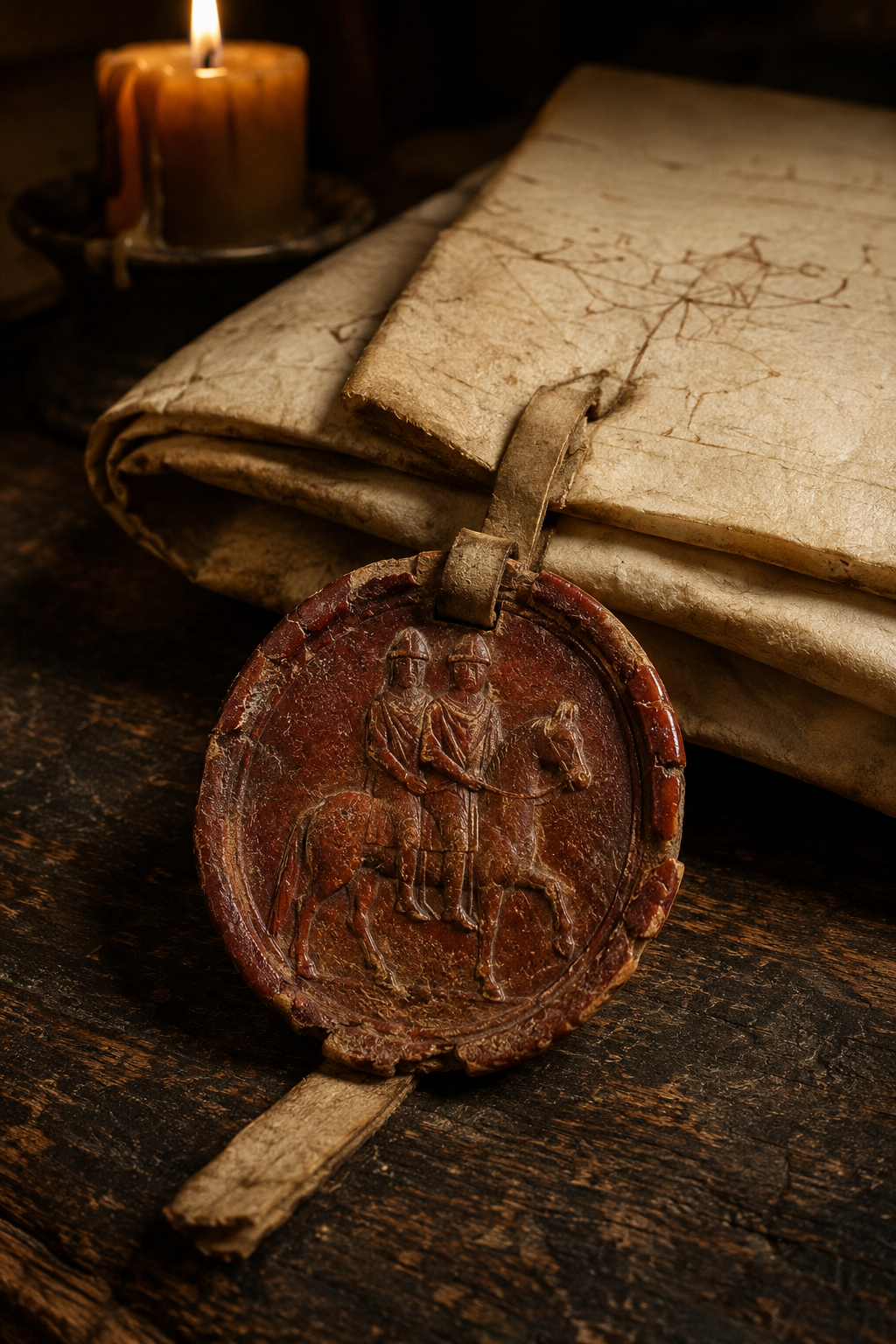
Pope Innocent II issued the bull Omne Datum Optimum, placing the Templars under direct papal protection. They were freed from many local taxes and much episcopal control, could retain spoils taken in battle and were permitted their own priests and burial grounds. Later privileges strengthened this independence. These freedoms allowed the order to move resources across political borders with a unity few medieval institutions possessed.
05Expansion
1140s–50s
A network across Europe
Royalty, nobles and ordinary believers donated farms, mills, churches, vineyards and rights to collect rents. These properties were organised into commanderies: working religious houses overseen by a commander. From England and Scotland to France, Iberia and Italy, their produce and income sustained the distant war in the East. This network also gave the Templars experience in transport, record-keeping, credit and the secure transfer of funds.
06Crisis
1187
Disaster at Hattin
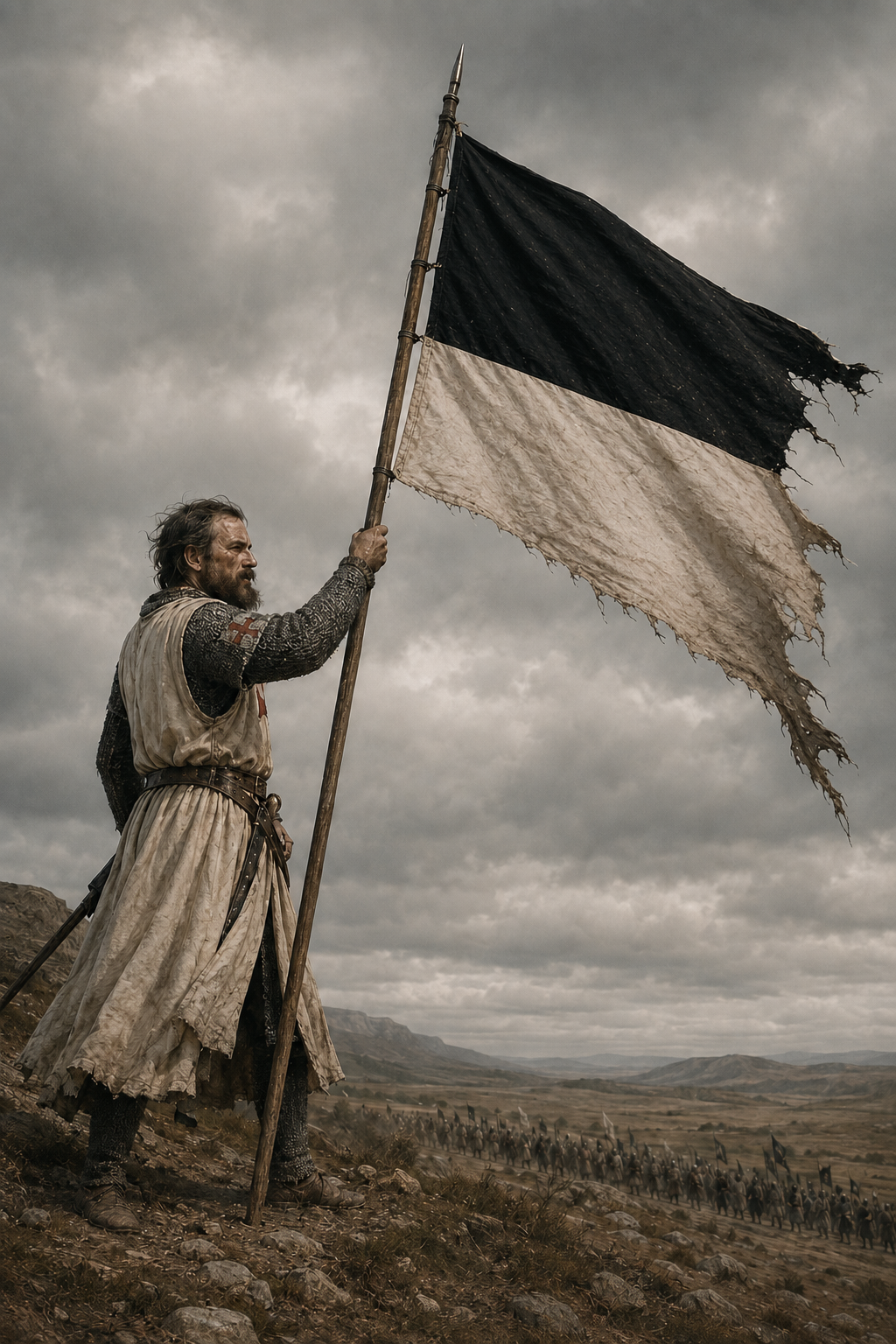
After years of rising tension, Saladin drew the crusader army onto the dry plateau near the Horns of Hattin. Exhausted by heat, thirst and smoke, the Christian forces were surrounded and destroyed on 4 July. The captured Templar and Hospitaller brothers were singled out for execution. Jerusalem surrendered in October, and the Templars lost their headquarters along with many castles and estates, forcing the order to rebuild from surviving coastal strongholds.
07Recovery
1191
A new centre at Acre
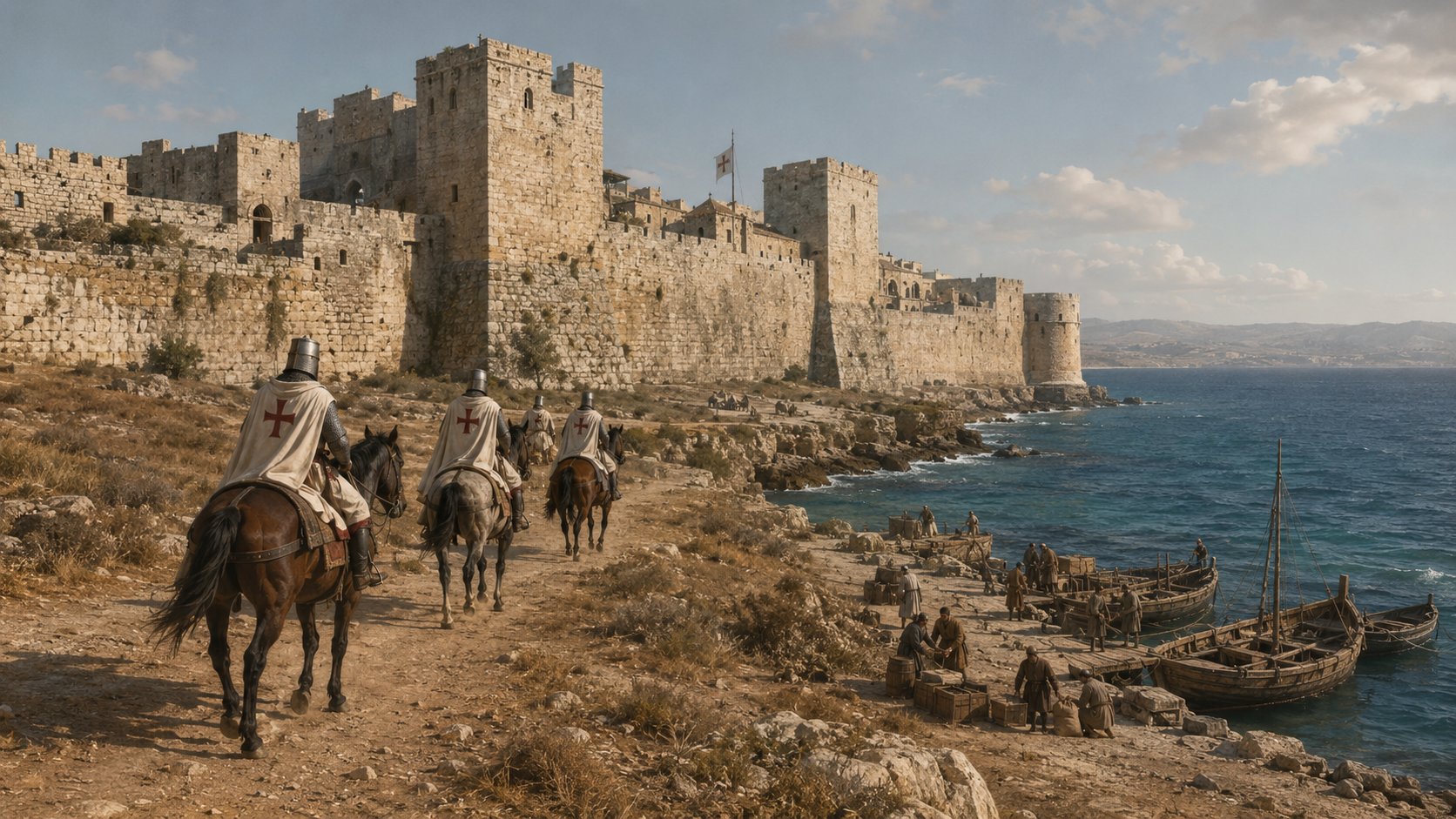
The Third Crusade recovered the port of Acre after a punishing two-year siege. With Jerusalem still beyond Christian control, Acre became the capital of the reduced crusader kingdom and the Templars established their principal eastern headquarters there. Its fortified complex served as residence, armoury, treasury and command centre. From Acre, the order guarded the remaining coastal territories and participated in successive crusading expeditions.
08Crusade
1218–21
The campaign in Egypt
The Fifth Crusade targeted Egypt, whose wealth and strategic position were seen as the key to recovering Jerusalem. Templars fought in the long siege of Damietta and helped defend the camp during repeated attacks. The city fell in 1219, but crusade leaders rejected favourable peace terms and advanced toward Cairo. Trapped by the Nile’s floodwaters and Egyptian forces, the army was forced to surrender Damietta and withdraw in 1221.
09Crisis
1244
Defeat at La Forbie
Jerusalem was lost again in 1244, and the military orders joined the kingdom’s forces near La Forbie, north-east of Gaza. The battle lasted for two days before the Christian line collapsed under pressure from Egyptian and Khwarazmian troops. Thousands were killed or captured; only a small number of Templars escaped. The defeat destroyed much of the crusader states’ field army and left their defence increasingly dependent on fortified coastal cities and castles.
10The end in the East
1291
The final stronghold falls
In April, the Mamluk sultan al-Ashraf Khalil surrounded Acre with a vast army and siege engines. When the walls were breached on 18 May, fighting moved through the streets as residents fled toward the harbour. The Templars made a last defence from their seaside fortress, which collapsed during the final struggle. The survivors withdrew first to Cyprus and then to the island of Ruad, but the order had lost the Holy Land mission for which it had been founded.
11Persecution
1307
Arrests across France
Deeply indebted to the order and determined to control its wealth, King Philip IV of France prepared a secret, coordinated strike. At dawn on Friday 13 October, royal officers arrested Templars throughout his kingdom, including Grand Master Jacques de Molay. The prisoners faced accusations of denying Christ, worshipping idols and conducting obscene initiation rites. Many confessions were extracted under torture, then withdrawn when the men were no longer in royal custody.
12Suppression
1312
The order is dissolved
Investigations outside France produced inconsistent evidence, yet Philip continued to pressure Pope Clement V. At the Council of Vienne, the pope suppressed the order by administrative decree rather than formally declaring it guilty of heresy. Its property was intended to pass to the Knights Hospitaller, although rulers claimed significant shares and transfer was uneven. Individual Templars were pensioned, absorbed into other orders, imprisoned or allowed to return to secular life.
13Aftermath
1314
The last Grand Master dies
After years of imprisonment, Jacques de Molay and the senior officer Geoffroi de Charney were brought before a public platform in Paris to hear sentences of lifelong imprisonment. When both men rejected their earlier confessions and proclaimed the order’s innocence, Philip IV ordered them burned as relapsed heretics. Their execution on an island in the Seine ended the leadership of the medieval order. In later centuries, the dramatic scene became the seed of curses, conspiracies and legends of secret survival.